
Juniper Road 'Eco House' Retrofit
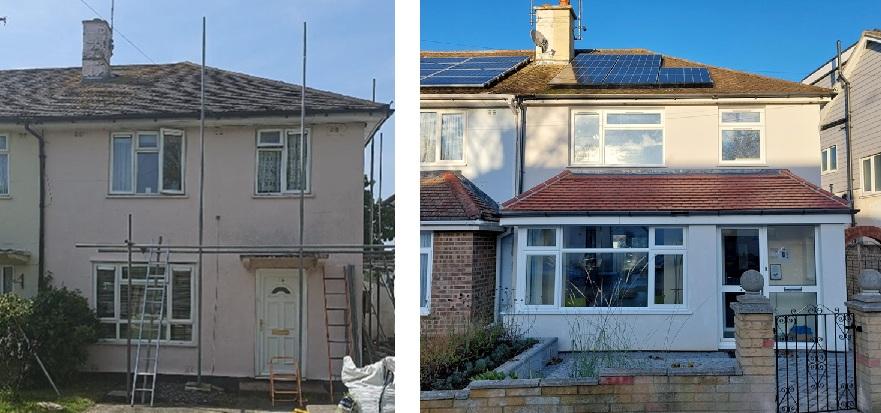
In December 2023, Southend-on-Sea City Council completed major retrofit works to a vacant property on Juniper Road in Leigh-on-Sea. The house, a 1950s solid-wall home, has since become one of the UK’s most sustainable retrofit properties and now serves as an exemplar ‘eco house’, demonstrating a range of innovative technologies that can be used to improve the energy efficiency and climate resilience of existing homes.
The project forms part of the council’s wider commitment to achieve net-zero emissions by 2030. It also acts as an educational resource, helping residents and professionals understand how retrofit solutions can reduce energy use, lower carbon emissions, and improve climate resilience.
Retrofit measures installed
Several measures were implemented to transform the property into the eco house it is today. These include:
- External wall insulation- The home was built in the 1950s/60s with uninsulated solid walls. The existing conservatory was removed, and 100mm insulation boards were fixed to all external walls. These were then covered with weatherproof render and redecorated.
- Loft insulation- The existing loft insulation was significantly improved with an additional 400mm of mineral wool insulation to reduce heat loss through the roof.
- New windows and doors- New insulated, draught-proof doors and triple-glazed windows were installed. The additional pane of glass reduces heat loss and also improves soundproofing and security.
- Air source heat pump- Improving the insulation reduced heat loss and lowered the property’s heating demand by more than half. This meant a smaller heating system could be installed, reducing both upfront and running costs. The existing gas boiler was replaced with an electric air source heat pump, alongside a hot water cylinder, new radiators and modern heating controls.
- Ventilation and Mechanical Ventilation with Heat Recovery (MVHR)- To improve indoor air quality, two heat recovery ventilation units were installed. These continuously extract stale air from the home while capturing its heat before it is expelled outside. This heat is then used to warm the incoming fresh air, reducing overall heat loss.
- Solar panels and battery storage- Ten solar panels were installed on the roof, generating approximately 3,000 kWh of electricity per year. This energy helps power the air source heat pump and household appliances, meaning around 31% of the home’s electricity is generated on site. A battery storage system was also installed to store surplus energy.
- AICO smart home monitoring system- Smart monitoring technology was installed to track heat, humidity and air quality within the home.
- Greywater recycling (Hydraloop)- A greywater recycling system captures water from showers, sinks and the washing machine. The water is treated and reused for toilet flushing, laundry and landscape irrigation.
- Smart water butt- A smart water tank captures rainwater from the roof and connects to the Hydraloop system to store excess water from the home. This system replaces the property’s former outdoor mains tap.
- Hydro-rock sustainable drainage solutions- Natural aquifer blocks were installed beneath paved areas around the house to improve flood resilience. Additional blocks in rain gardens collect and store rainwater, allowing plants to absorb water naturally and reducing the need for irrigation.
- Highway water reuse- Surface water from the nearby highway is redirected during rainfall into a verge rain garden. The water is stored, filtered and reused by the planting, keeping rainwater out of the surface water drainage system and helping to reduce flood risk.
- Climate-resilient garden- The garden was designed to be colourful, low-maintenance and drought-tolerant, with year-round visual interest. Many of the plants were selected for being pollinator-friendly, supporting insects that are vital for biodiversity and food production.
Environmental and financial benefits
The retrofit has dramatically improved the property’s environmental performance. Carbon emissions were reduced from 3.34 tonnes per year to just 0.4 tonnes, while overall water demand fell by 45%.
Energy costs have also been significantly reduced. Annual energy bills are estimated to have fallen from around £2,000 to approximately £500 per year, saving households around £125 per month. During the ongoing cost-of-living crisis, these savings make a meaningful difference to residents.
Opening the eco house to the public
After the retrofit works were completed, the property remained vacant for four months so the council could open it to the public. Visitors were invited to tour the home and learn about the technologies used, how they work and what retrofit options might be possible in their own homes.
Tours were led by staff from the council’s Civil Engineering and Coastal team and the Housing team, who talked through the improvements both visible and hidden within the building.
During this period the eco house welcomed 340 visitors, including:
- Local residents
- Council staff
- Elected members
- Landlords
- Developers
- Architects
- Contractors
- Students
- Other local authorities
- National government representatives
Feedback from visitors was very positive. Surveys showed:
- 20% reported increased knowledge of retrofit after visiting
- 10% said they were more likely to consider retrofit measures in their own homes
- The tours received an overall 4.8 out of 5 satisfaction rating
See below, or visit the council’s YouTube channel to watch an in-depth video about the Juniper Road project, including interviews with the project team. You can also learn more on the dedicated page on Catchment to Coast's website.
Since the project’s completion, a family has moved into the property, and the council has continued delivering retrofit works across other South Essex Homes properties in the city, building on the success and lessons learned from this pioneering project.